Nail Salon Equipment and Product List: What You Actually Need
28 Jul 2026 · VIRAA Professional · 4 min read
The fastest way to overspend on a nail studio is to buy the full catalogue before you have served a client. The fastest way to look unprofessional is to skip the four things that actually matter. This list separates the two.
Prices quoted are current VIRAA retail; treat them as a planning reference rather than a quotation. If you have not set your service menu yet, do that first — see how to open a nail salon in India.
Day one: you cannot open without these
Curing and finishing equipment
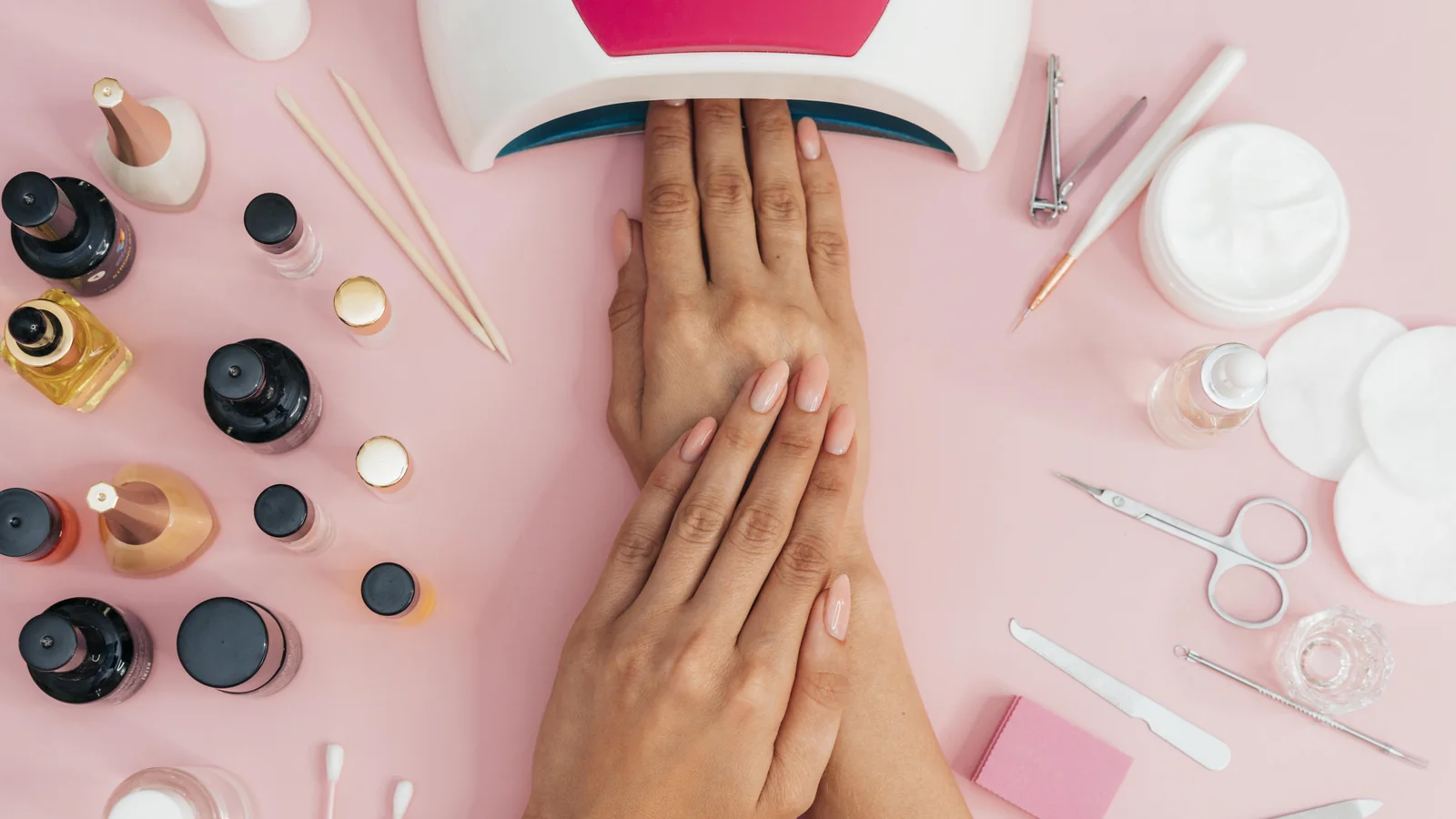
Gel does not set without a lamp, and a drill is what turns a 90-minute service into a 50-minute one. Combination units save both money and bench space in a small studio.
- 2-in-1 Rechargeable Lamp & Drill — a sensible single-station starting point
- 3-in-1 Lamp, Fan & Drill — adds dust extraction
- 2-in-1 Dust Collector & Lamp — for studios doing volume filing
- 4-in-1 Dust Collector, Drill, Lamp & Hand Rest — a complete station in one unit
Browse the full nail equipment range.
Do not skip dust extraction. Filing dust is the exposure your technicians take home. A dust collector is cheaper than staff turnover, and clients notice a studio that does not smell of acrylic.
The prep system
Almost every lifting complaint traces back to preparation, not to the colour. This is where the money is best spent.
- Base Coat — adhesion and nail protection
- Cleanser, dehydrator and primer — see the prep system range
Colour
Range matters more than depth when you open. A client who cannot find her shade books elsewhere; a client who finds it in a 128-colour chart becomes a regular.
- 128 Colour One Coat Gel Polish 15ml — the widest single range, one-coat coverage
- 60 Colour Gel Polish 15ml — a smaller starting palette
- 80 Colour Professional Gel Polish 7.5ml — more shades, less waste per bottle
The full gel polish collection is TPO and HEMA free — worth knowing given that HEMA is the leading cause of allergic contact dermatitis in gel work, and technicians, not clients, are the ones most affected.
Top coats
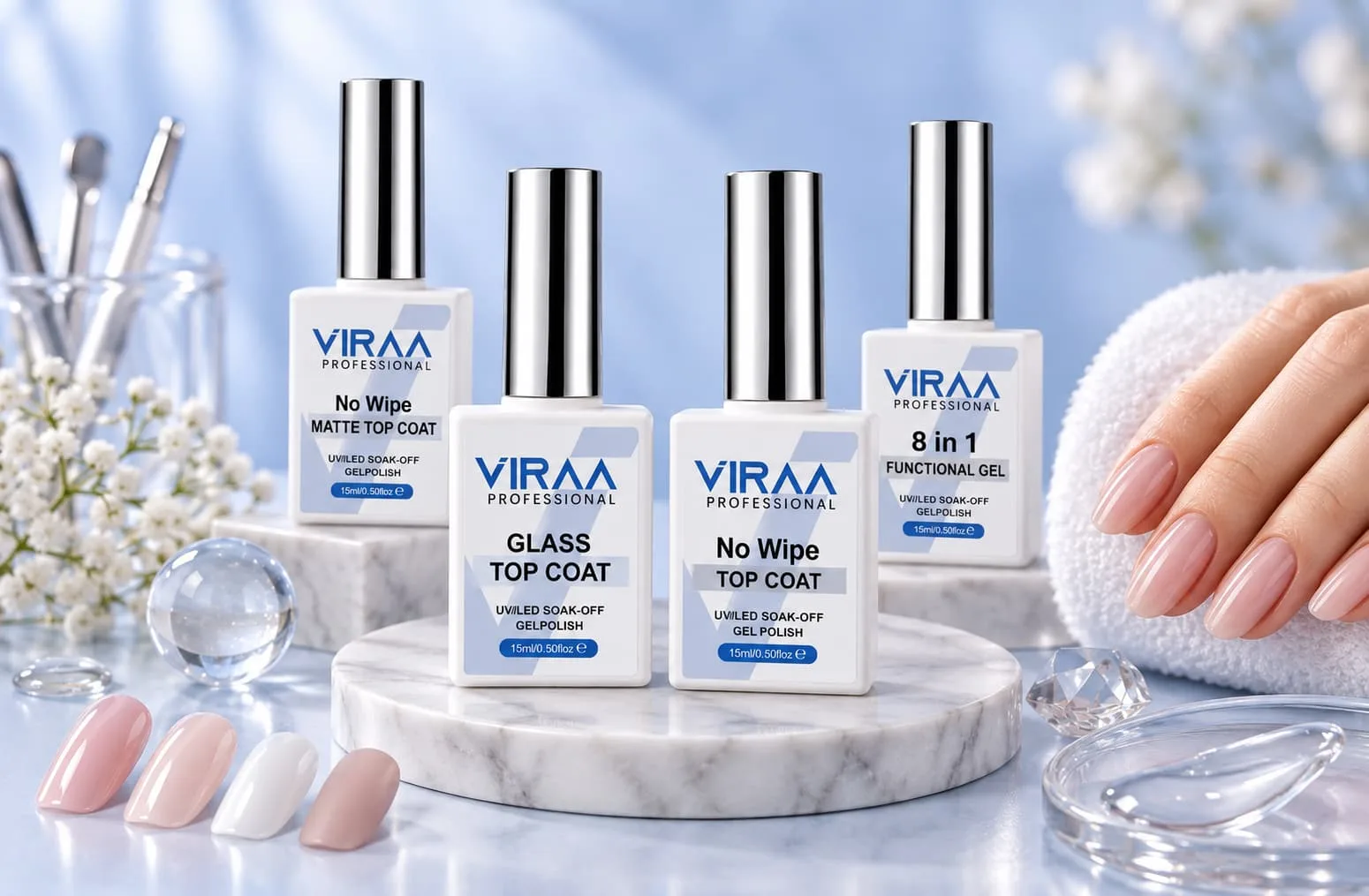
Finish is what clients photograph. Carry at least two.
Tools and consumables
- Files, buffers and a block buffer
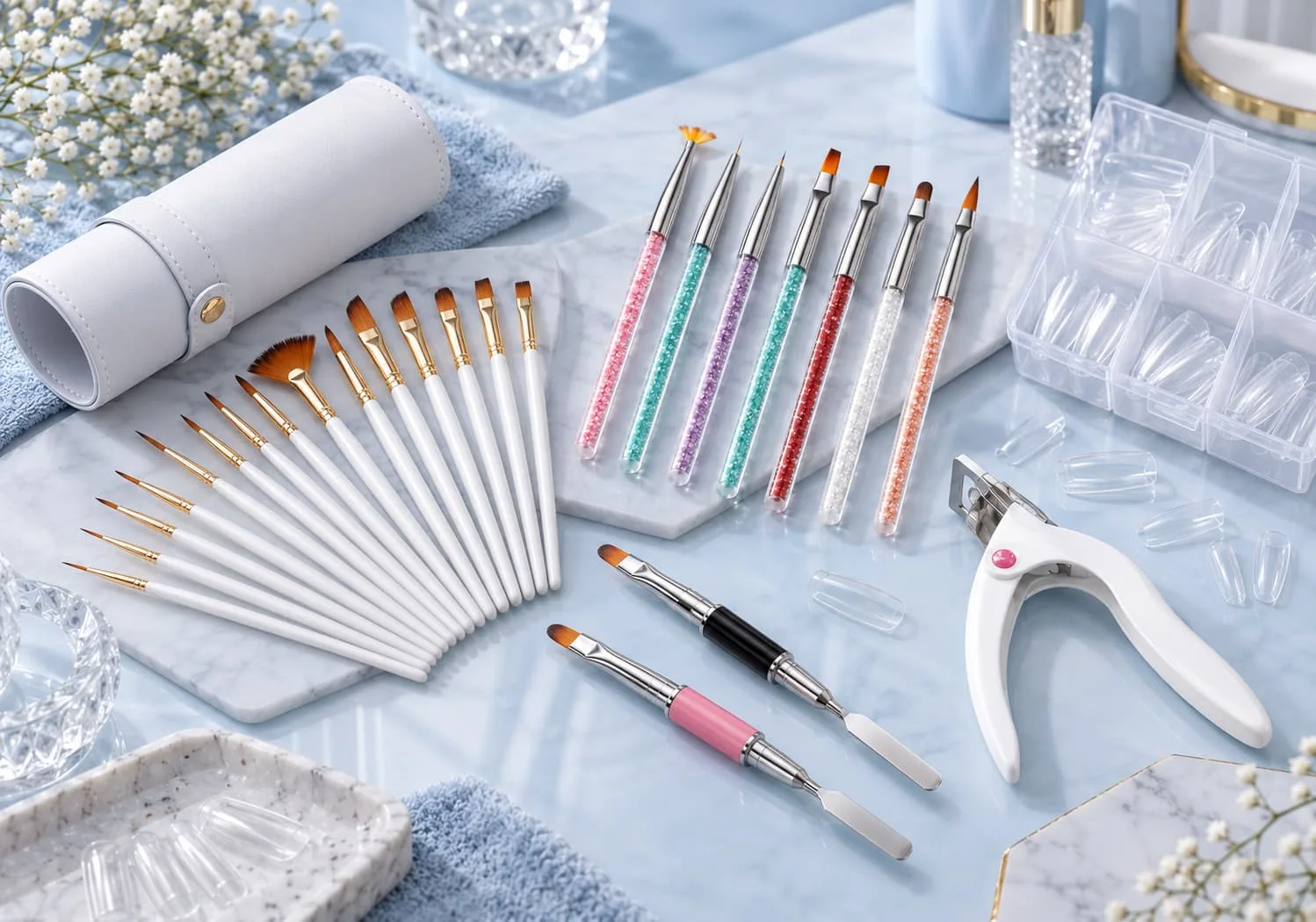
- Cuticle pushers, nippers, brushes for cleanup
- Lint-free wipes, cotton, foils for removal
- Nail pump dispensers — faster and less wasteful than pouring
See the full nail essentials range.
Month one: add once you know your demand
Extensions and enhancement
Only if your menu includes them — extensions are the highest-priced service on most Indian menus and the most skill-dependent.
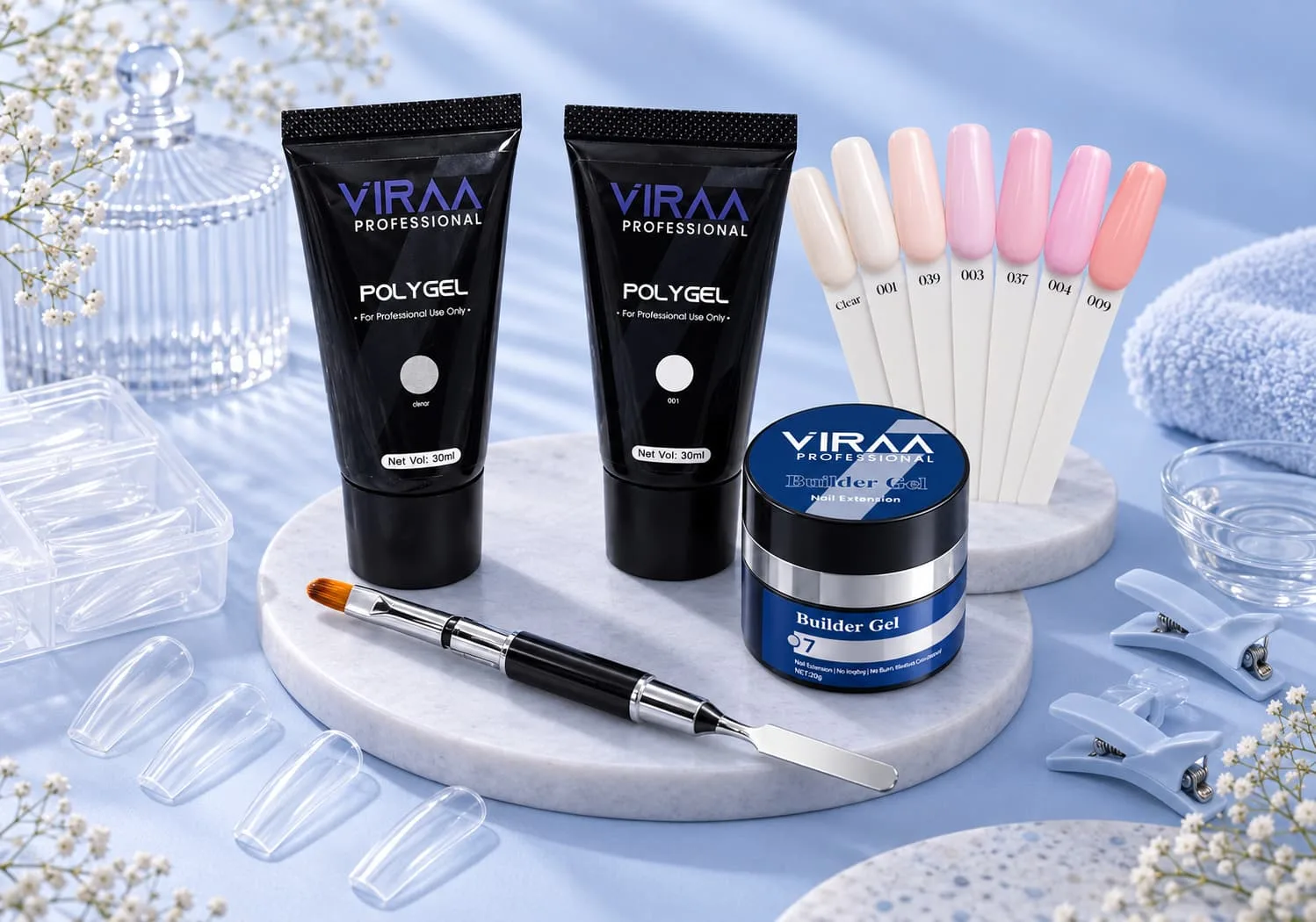
- Builder Gel and BIAB (Builder in a Bottle)
- Tips, forms and the nail extension range
Nail art
Art is what justifies a premium and what fills your Instagram grid.
- 3-Piece Nail Art Brush Set and the 5-Piece Gel, Nail Art & Acrylic Brush Set
- Ombre Nail Art Brush
- Blooming Gel and 8-in-1 Functional Gel
- The nail art special gel polish range
Later: when volume justifies it
- A second and third fully equipped station
- Pedicure chairs — a large jump in both cost and floor space
- Retail display stock for take-home sales
- Backup lamp and drill, so one failure does not cancel a day of bookings
An opening stock budget
A worked example for a two-station studio. Your mix will differ; the point is the shape of the spend, not the total.
| Category | Share of opening stock spend | Why |
|---|---|---|
| Equipment (lamps, drills, extraction) | 45–55% | One-off, lasts years, hardest to upgrade later |
| Colour range | 20–25% | Breadth wins bookings; restock the fast movers only |
| Prep, base and top coats | 10–15% | Consumed fastest, cheapest to get wrong |
| Tools and brushes | 10% | Buy good ones once |
| Consumables | 5–10% | Reorder monthly against actual use |
Three buying rules
- Buy breadth in colour, depth in prep. Clients choose on shade; retention depends on the manicure lasting three weeks.
- Buy what you can reorder. A discontinued shade that a regular client loves is a problem you created for yourself.
- Read the formulation, not just the price. You will breathe and touch these products for eight hours a day. TPO was banned in the EU from September 2025; HEMA has been professional-use-only there since 2020. Neither is restricted in India, so the responsibility to check sits with you.
Next: work out what all this will earn you in how much a nail salon makes in India.
Sources
- European Commission — TPO in nail products: questions and answers
- Chemistry World — Why has the EU banned a key chemical in gel nail products?
- Contact Dermatitis — HEMA: a clinical review of contact allergy
- Contact Dermatitis — HEMA and other (meth)acrylates in nail cosmetics: market survey
- Dingg — How to Open a Nail Salon in India
Figures were current when this article was published on 28 July 2026. Market data and salary bands date quickly — check the linked sources before relying on a number for a business plan.