The Nail Salon Business in India: Why 2026 Is the Moment
14 Jul 2026 · VIRAA Professional · 5 min read
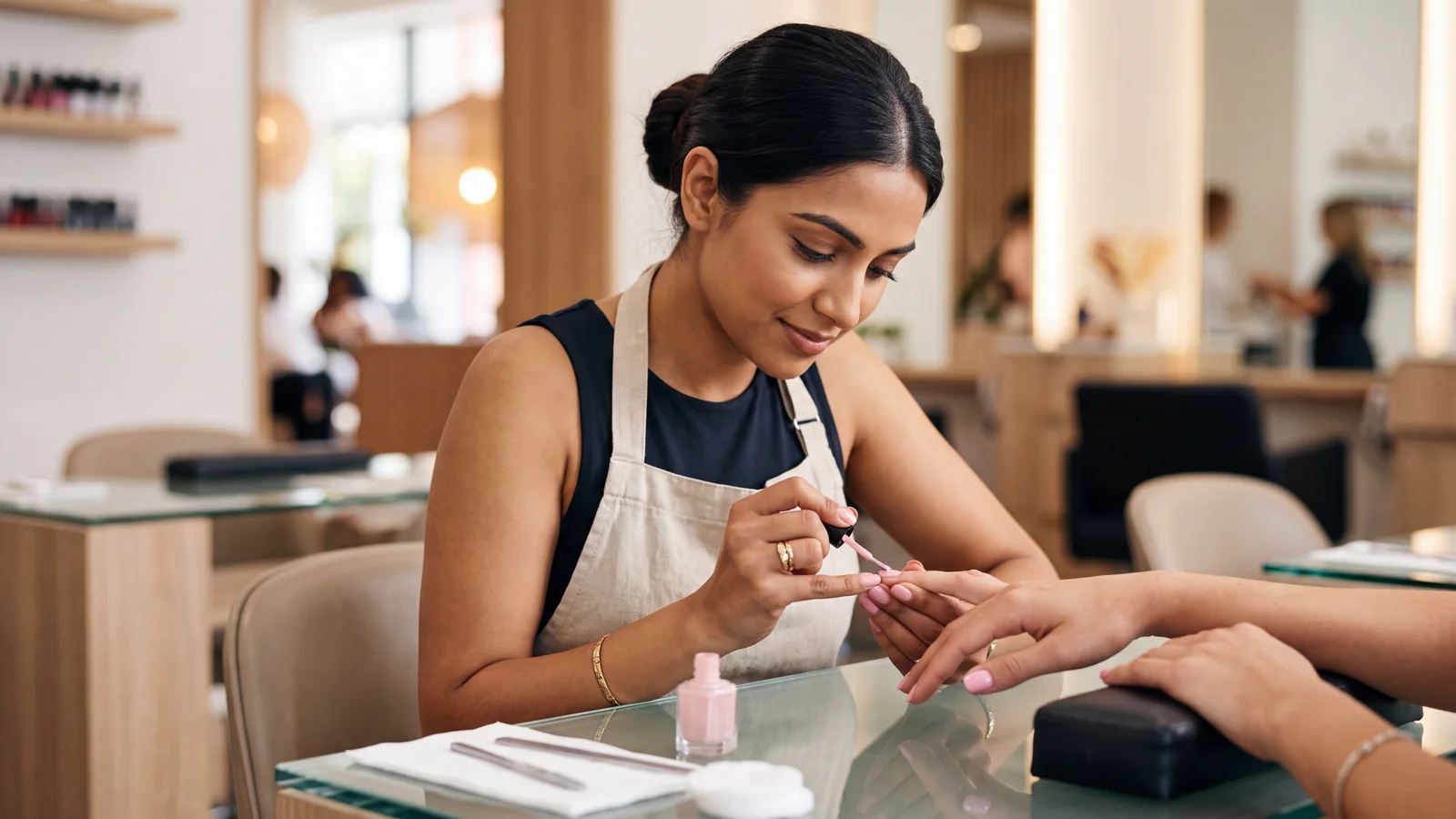
Ten years ago a manicure in India was something you added to a facial appointment. Today it is the appointment. Nail bars have their own shopfronts, their own Instagram following and, increasingly, their own economics — and the category is growing faster than the salon industry that contains it.
This guide is the overview. If you already know you want to open, skip ahead to how to open a nail salon in India, or straight to the equipment and product list.
The market, in numbers
India's nail salon market generated USD 533 million in 2023 and is forecast to reach USD 1,040 million by 2030 — a compound annual growth rate of about 10%, according to Grand View Research. That is roughly a doubling in seven years.
It sits inside a much larger salon industry. IBEF values the Indian salon market at ₹1,01,949 crore (US$11.65 billion) in 2024, growing to ₹2,01,185 crore (US$22.99 billion) by 2033 at around 7.9% CAGR. Nails are growing meaningfully faster than the industry average.
| Measure | Now | Forecast | Growth |
|---|---|---|---|
| India nail salon services | USD 533M (2023) | USD 1,040M (2030) | ~10% CAGR |
| India salon industry (all services) | ₹1.02 lakh crore (2024) | ₹2.01 lakh crore (2033) | ~7.9% CAGR |
Four things actually driving it
1. The grooming base got much bigger
IBEF puts the number of Indians actively engaged in personal grooming and wellness routines at 240 million. That is the addressable pool, and it is no longer concentrated in six cities.
2. Affluent India is compounding
High-income consumers are about 4% of the working-age population today — roughly 60 million people — and that group is growing at about 12% a year, on track for around 100 million by 2027. Nail services are a discretionary repeat purchase, which is exactly the kind of spend that moves with this cohort.
3. Nails are a repeat business, not an occasion business
This is the part that matters commercially. Gel polish needs infilling or removal every two to three weeks. Extensions need refills. A bridal makeup client is one booking; a gel client who likes her technician is 17 to 26 bookings a year. Repeat frequency is why a small nail studio can out-earn a much larger parlour per square foot.
4. The growth has moved past the metros
Organised salon chains are no longer a big-city story — Lakmé Salon alone operates across 190 cities with 450+ outlets. Where the chains have gone, standalone nail studios follow, usually at lower rent and with less competition. We break the economics down by city tier in how much a nail salon earns in India.
Why the product side is about to matter more
Until recently, "which gel do you use" was a question only technicians asked. That is changing, and regulation is the reason.
On 1 September 2025 the EU banned TPO (trimethylbenzoyl diphenylphosphine oxide), a common photoinitiator in gel polish, after reclassifying it as a category 1B CMR substance — toxic for reproduction. Salons across the EU had to discard existing stock. TPO is not banned in India or the US, so plenty of product on the Indian market still contains it.
HEMA is the other one. It is the single most common cause of allergic contact dermatitis in gel nail work, and the people most affected are technicians themselves — across published case series, nail technicians and beauticians made up 56% to 97% of occupational cases. The EU restricted HEMA in nail cosmetics to professional use only in 2020, with mandatory warning labels. A market survey of 394 nail products found HEMA in nearly 60% of them, with the required warnings missing from a third to a half.
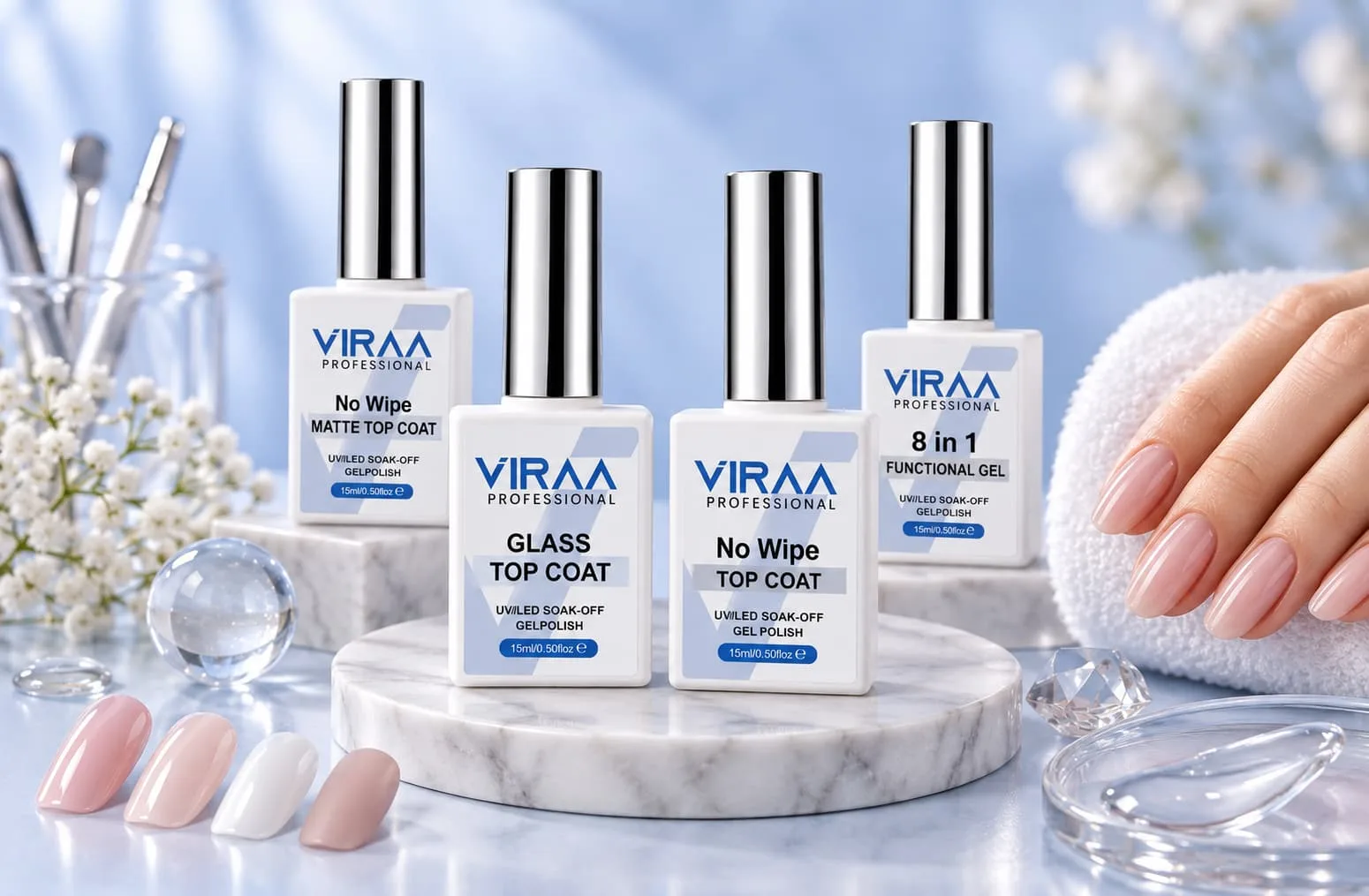
What this means for a new salon. Your own hands are exposed to these products every working day, far more than any client's. Choosing TPO- and HEMA-free product is an occupational-health decision before it is a marketing one — and it is becoming a question clients ask. Every VIRAA gel polish is formulated TPO and HEMA free.
Three ways into the business
| Route | Typical starting investment | Best for |
|---|---|---|
| Freelance / home studio | From ₹30,000 | Testing demand and building a client list before signing a lease |
| Independent studio | ₹5–10 lakh (small), ₹12–25 lakh (mid-size) | Owners who want control of pricing, brand and product |
| Franchise | ₹20–40 lakh | Buying a system and a name rather than building one |
Most people underestimate the first row. A freelancer with a good kit and 30 regular clients is a real business, and it is the lowest-risk way to find out whether you enjoy the work before you commit to rent. We cover that path in freelance nail artist income in India.
What to read next
- How to open a nail salon in India — costs, licences and a 90-day plan
- The nail salon equipment and product list — what you actually need on day one
- How much does a nail salon earn — worked numbers for tier 1, 2 and 3
- Freelance nail artist income — the no-lease route
Sources
- Grand View Research — India Nail Salon Market Outlook
- IBEF — Styling India's Growth: The Indian Salon Landscape
- European Commission — TPO in nail products: questions and answers
- Chemistry World — Why has the EU banned a key chemical in gel nail products?
- Contact Dermatitis — HEMA: a clinical review of contact allergy
- Contact Dermatitis — HEMA and other (meth)acrylates in nail cosmetics: market survey
- Dingg — How to Open a Nail Salon in India
Figures were current when this article was published on 14 July 2026. Market data and salary bands date quickly — check the linked sources before relying on a number for a business plan.