Professional Nail Drill Machine: What Actually Matters
20 Aug 2026 · VIRAA Professional · 3 min read

Nail drill listings compete on one number: RPM. It is the least useful number on the page.
A drill that reaches 35,000 RPM is not better than one that reaches 25,000 if you spend your working life between 6,000 and 15,000 — which almost everybody does. What separates a drill you keep from one you replace in a year is how it behaves at those speeds, with a bit pressed into hard product.
The four things worth checking
1. Torque, not top speed
Torque is whether the drill holds its speed when you lean on it. A low-torque machine bogs down against a thick builder gel overlay, and a bogging drill is where damage happens: the bit skips, catches, and takes a gouge out of something.
You cannot read this off a spec sheet. You can feel it in ten seconds on a practice tip.
2. The handpiece, because you hold it all day
Weight and balance decide whether your hand aches after four sets. So does heat — a handpiece that warms up is telling you the motor is working harder than it should. And vibration: a drill that buzzes will cost you fine control on cuticle work, which is exactly where you need it.
3. Forward and reverse
Not a luxury. If you work on left-handed clients, or on your own nails, reverse is the difference between a controlled pass and dragging the bit against the direction of the nail.
4. How the bit is held
Twist-lock chucks are quicker; key chucks grip harder. Either is fine. What is not fine is a chuck with any play in it — a bit that wobbles at 10,000 RPM will chatter, and chatter marks the product.
The three bits that do most of the work
| Bit | Job | Speed |
|---|---|---|
| Medium carbide barrel | Taking bulk product down before a refill | Higher — but let it cut |
| Safety / ceramic bit | Cuticle area, where you cannot afford to slip | Low |
| Fine sanding band | Refining the surface before top coat | Low to medium |
Our drill bits fit standard 3/32" handpieces, which is what almost every professional drill in India uses.
Technique, briefly, because it matters more than the machine
- Let the bit cut. Pressure does not speed the job up; it generates heat and takes control away from you.
- Keep it moving. A bit held in one place is how you get a ring of fire.
- Stay on the product. The drill is for the overlay, not the natural nail. Where the two meet, slow down.
- Ask about heat. Clients feel it before you see it, and by then the damage is done.
Corded or rechargeable
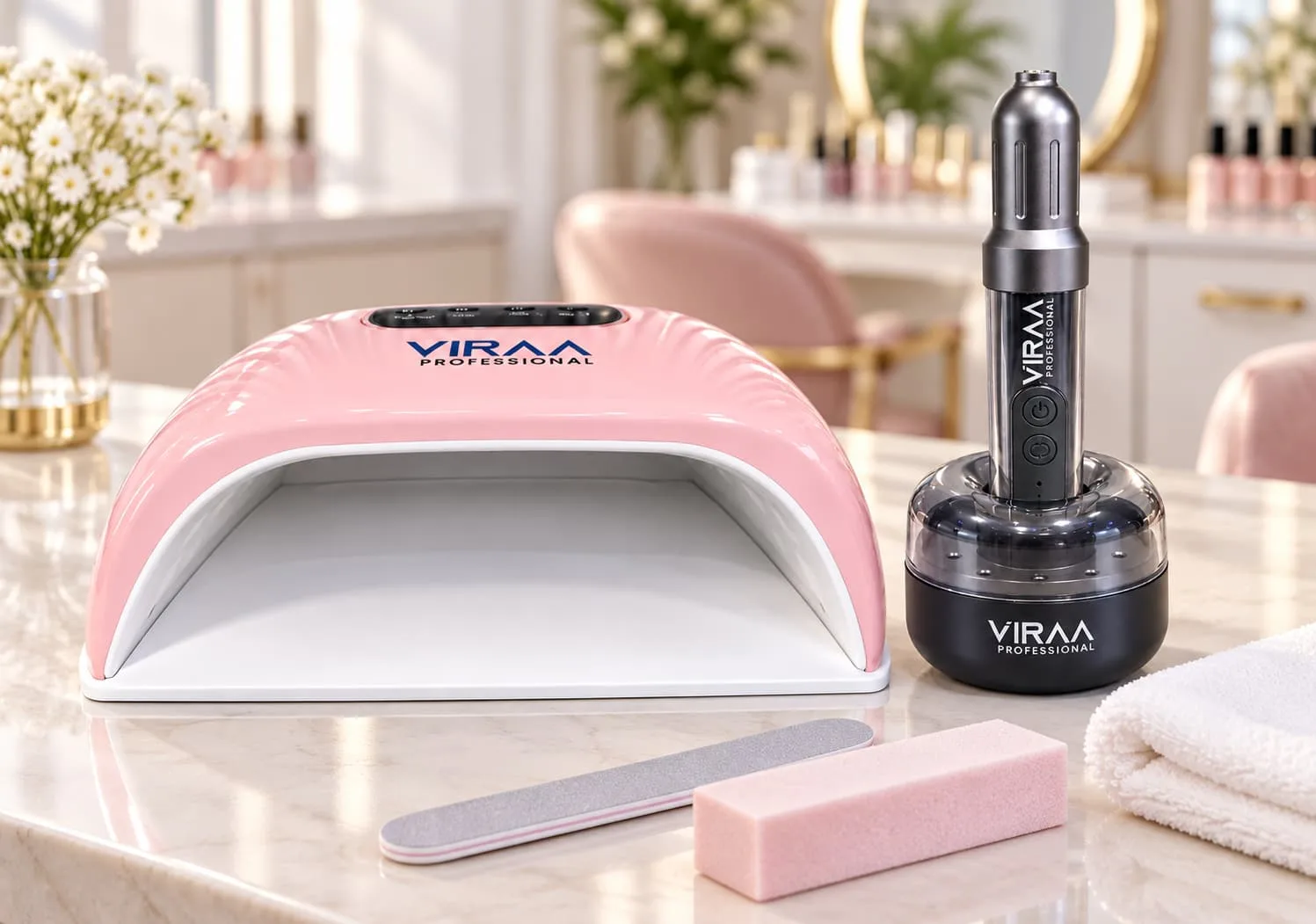
Our 4-in-1 base puts the drill, the extraction, the lamp and the hand rest in one unit — sensible for a station being built from scratch, and it removes three plugs from the wall.
If you are buying the drill on its own, buy the dust collector in the same order. Filing without extraction is the part of this job that compounds quietly over a career.