Which Nail Tips Suit Which Service? Matching Tip Type to Client and Look
23 Oct 2026 · VIRAA Professional · 6 min read
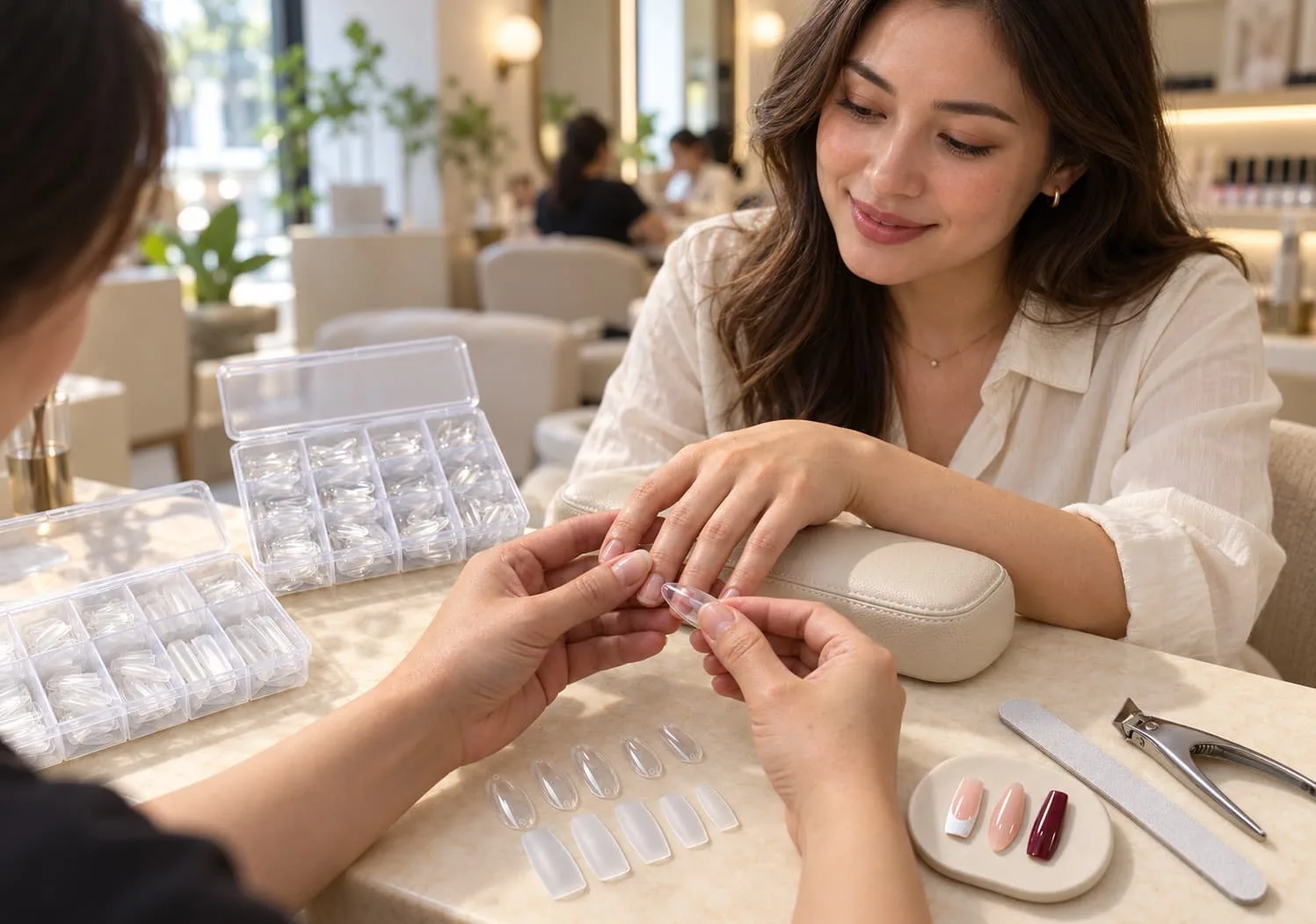
A client wants longer nails by Friday. Do you reach for clear tips, soft gel tips or a short French box? The right nail tips depend on three things: the service you will do, the shape of the client's natural nail, and how long she can comfortably wear.
This guide works through those three questions in order. By the end, you should know which nail tips to keep at your desk and which to save for special requests.
Start with the service, not the shape
Shape is the last decision, not the first. Before you think about almond or coffin, decide what the tip has to do.
Tip plus overlay. Here the tip only adds length. You blend it, then build strength with builder gel, polygel or acrylic on top. Clear tips suit this well because they disappear under the overlay and leave you free to shape them.
Full-cover soft gel tips. These cover the whole nail plate and arrive pre-shaped. You fix them with an adhesive gel or glue, cure if the system needs it, then add colour. They save shaping time, which helps when the book is full. Still unsure whether a client suits tips or a sculpted nail on a form? VIRAA's comparison of soft gel tips vs sculpted nail extensions sets out the trade-offs in plain terms.
Short natural length. Some clients want a tidy, short nail with a French finish. A box of short French tips in numbered sizes keeps these appointments quick.
Pedicure extensions. Toenails have a different curve and width. Toe tips are shaped for them, so you avoid forcing a finger tip onto a big toe.
Read the client's natural nail
Two clients can choose the same coffin shape and still need different tips. Look at these features before you open a box.
Width
Every finger has its own width. Test each nail and choose the tip that covers it from one sidewall to the other without pressing into the skin. If a nail falls between two sizes, take the larger one and file the sides. A tip that is too small leaves the edges bare, and that is where lifting usually starts.
Curve
Some nails are flat. Others curve sharply from side to side. A tip with the wrong curve rocks on the nail or leaves a gap underneath. Gently squeeze the tip in place before you apply glue. If it still lifts at the sides, try another size or style.
Nail plate condition
Thin, peeling or damaged nails need gentle prep and a light hand. Thick, healthy nails give you more options. In every case, the bond depends on preparation. Push back the cuticle, remove shine, dehydrate and prime before the tip goes on. The VIRAA prep system groups these steps in one place.
Think about daily life and length
A long almond set looks lovely in photos. It is less lovely for someone who types all day, cooks at home or works with her hands.
Ask a few quick questions at the consultation:
• Does she type, cook, garden or lift things often?
• Has she worn extensions before?
• Is this for a wedding, a holiday or everyday wear?
First-timers often feel happier with a short or medium length. They can go longer at the next fill once they know how it feels.
A quick nail tips match table
Service or need | Tip type to consider | Why it fits |
Tip and overlay with builder gel, polygel or acrylic | Clear tips | Transparent base you can cut, shape and cover |
Fast full-cover extensions | Pre-shaped soft gel tips (almond or coffin) | Shape is already done, so fitting is quicker |
Seamless look at the cuticle | Traceless tips | Ultra-thin edge needs little blending |
Short, neat French nails | Short French tip box | Numbered sizes speed up fitting |
Pedicure extensions | Toe tips | Curve and size made for toenails |
VIRAA Professional stocks each of these types in its nail tips collection. The pre-shaped soft gel tips come in medium almond and medium coffin, and the traceless tips come in medium coffin and long almond.
What makes traceless tips different
Traditional tips have a visible step where the tip meets the natural nail. You file that step down so the overlay looks smooth. Traceless tips have a matte, ultra-thin edge, so the step is tiny from the start.
That saves time and filing. It also reduces the risk of over-filing the natural nail near the cuticle. The trade-off is that thin edges need careful handling, and you should trim them with a tip cutter rather than clippers.
Tools that go with your nail tips
A good tip still needs the right supporting tools:
1. A tip cutter. It cuts the plastic cleanly. Clippers can crack thin tips.
2. Nail glue or adhesive gel. Use the adhesive your system recommends and follow its instructions.
3. Fixing clips. They hold dual forms and moulds steady while polygel cures.
4. A file and buffer. You still need to refine the shape and blend the edges.
Common fitting mistakes
Most problems trace back to a few habits:
• Choosing a tip that is a little too small because it "looks neater".
• Skipping the dehydrate or primer step to save a minute.
• Applying too much glue, which floods the cuticle area.
• Leaving air pockets under the tip.
• Cutting length after the overlay instead of before.
For the step-by-step application method, VIRAA's nail tips guide on shapes, sizes and application walks you through it.
A hypothetical salon example
Imagine a two-chair salon in Pune that offers three extension services. It could keep clear tips for overlays, one box of soft gel coffin tips for quick full-cover sets, and a short French box for office clients. Toe tips and traceless tips might sit in a drawer for less frequent requests. As demand grows, the salon adds an almond box.
That is just one sensible starting point. Your own mix should follow what clients book most.
Choose tips with confidence
Pick the service first, read the nail second and agree the length third. Then open the box that fits all three. When you are ready to restock, browse the VIRAA Professional nail tips collection and compare clear, soft gel, traceless, French and toe tips side by side.
Reference Link Table
Topic or resource | Why it is relevant | Verified URL |
Nail tips collection | Clear, soft gel, traceless, French and toe tips with cutters and glue | |
Nail tips guide | Step-by-step sizing and application | https://viraaprofessional.com/blogs/news/nail-tips-guide-shapes-sizes-and-how-to-apply-them |
Prep system collection | Cleanser, dehydrator, primer and base for a lasting bond | |
Soft gel tips vs sculpted extensions | Compares tips with building on a form | https://viraaprofessional.com/blogs/news/soft-gel-tips-vs-sculpted-nail-extensions |