Nail Extension Course in India: Fees, Duration and the Kit You Need
25 Oct 2026 · VIRAA Professional · 8 min read

A nail extension course is the most common way into nail work in India, and the choice of course matters more than people expect. Two courses with the same name can teach very different things, last very different lengths of time and include very different kits. This guide explains what a good course covers, how long it usually takes, what it typically costs, the kit you will need, and the questions to ask before you pay.
Fees and durations below are indicative ranges based on how courses are commonly offered in Indian cities. They vary a lot by city, academy and certification, so use them to compare offers rather than as a fixed price.
What a good nail extension course teaches
A certificate is only as good as the skills behind it. A complete beginner course should cover:
- Hygiene and safety. Cleaning and disinfecting tools, working with lamps, recognising nail conditions that should not be worked on, and protecting yourself from dust and from skin contact with gel.
- Nail anatomy and prep. How the nail grows, pushing back the cuticle, removing shine, dehydrating and priming. Most lifting comes from weak prep, so a course that rushes this is a warning sign. Our prep products guide covers the order.
- Tips. Choosing the right size, fitting, cutting and blending. See the nail tips guide.
- At least one building system. Sculpted gel, polygel, builder gel or acrylic, including where to put the apex and how to keep the product off the skin.
- Filing and shaping. By hand and, in longer courses, with an e-file or drill. The drill bits guide is a good companion.
- Gel polish and finishing. Base coat, colour, top coat, and curing times for different lamps.
- Refills and removal. Safe soak-off and infills, which are a big part of a working technician's week.
- Basic nail art. French tips, ombre, chrome or cat eye, depending on the course.
- Working with clients. Consultation, aftercare advice, pricing and building a portfolio.
How long does a nail extension course take?
| Course type | Typical length | Who it suits |
|---|---|---|
| Workshop on one system | 1 to 3 days | People who already do gel polish and want to add one extension system |
| Beginner certificate | 2 to 6 weeks | Complete beginners who want to work in a salon or freelance |
| Advanced or master class | 1 to 5 days per topic | Working technicians adding speed, art or a new system |
| Long diploma or academy programme | 2 to 6 months | Students who want nails alongside beauty or salon management |
The course is only the start. Most technicians need weeks or months of regular practice after it before they are quick and consistent. Budget time to practise on tips and practice hands, then on friends and family, before charging full price.
A typical beginner course, week by week
Every academy structures its course differently, but a well-planned four-week beginner course often looks like this:
- Week 1: foundations. Hygiene, tool care, nail anatomy and contraindications, then prep practised over and over until it is quick and thorough. Gel polish application and curing on practice tips.
- Week 2: tips. Sizing, fitting, cutting and blending tips, then overlaying them with gel or builder gel. Filing shape and length by hand.
- Week 3: building. Sculpting on forms with gel or polygel, placing the apex, keeping product off the skin, and the first full sets on models under supervision.
- Week 4: finishing and business. Refills and safe removal, French and ombre, basic chrome or cat eye, photographing your work, pricing and client aftercare, and an assessment set.
If a course promises all of this in a single day, it is a demonstration rather than training. You can learn what the steps are in a day; you cannot learn to do them well.
Common beginner mistakes a good course fixes
Trainers see the same problems in almost every batch, and a course that corrects them early saves months of frustration:
- Rushed prep. Skipping the buff, the dehydrator or the primer, which leads straight to lifting.
- Product on the skin. Gel or polygel touching the cuticle or sidewalls causes lifting and can cause skin sensitivity over time.
- Thick layers. Layers that are too thick do not cure through and stay soft underneath.
- Wrong tip size. A tip that is too small leaves the sidewalls unsupported, which is where it cracks.
- Over-filing. Filing into the natural nail during prep or removal thins it and makes it sore.
- Short curing. Not curing for as long as the lamp and the gel need.
Online, offline or both?
Online courses have improved, and they suit people who cannot travel or want to learn theory at their own pace. Their limit is feedback: a trainer on a screen cannot feel how thick your product is or see the underside of your apex. Many students combine the two, learning theory and watching demonstrations online, then booking an in-person workshop to have their technique checked. If you go fully online, choose a course that reviews photos or videos of your own work and gives specific corrections.
Nail extension course fees in India
Fees depend on the city, the length of the course, the class size, the trainer's reputation, the certificate and, above all, whether a kit is included. As a rough guide:
- Short workshops are usually at the lower end, often from around Rs 5,000 to Rs 15,000.
- Beginner certificate courses of a few weeks commonly cost from around Rs 20,000 to Rs 60,000.
- Long academy programmes and internationally branded certifications can cost considerably more.
When you compare two courses, compare the hours of hands-on practice, the number of students per trainer and what is in the kit, not just the fee. A cheaper course without a kit can end up costing more once you buy the products yourself.
The student kit: what you need
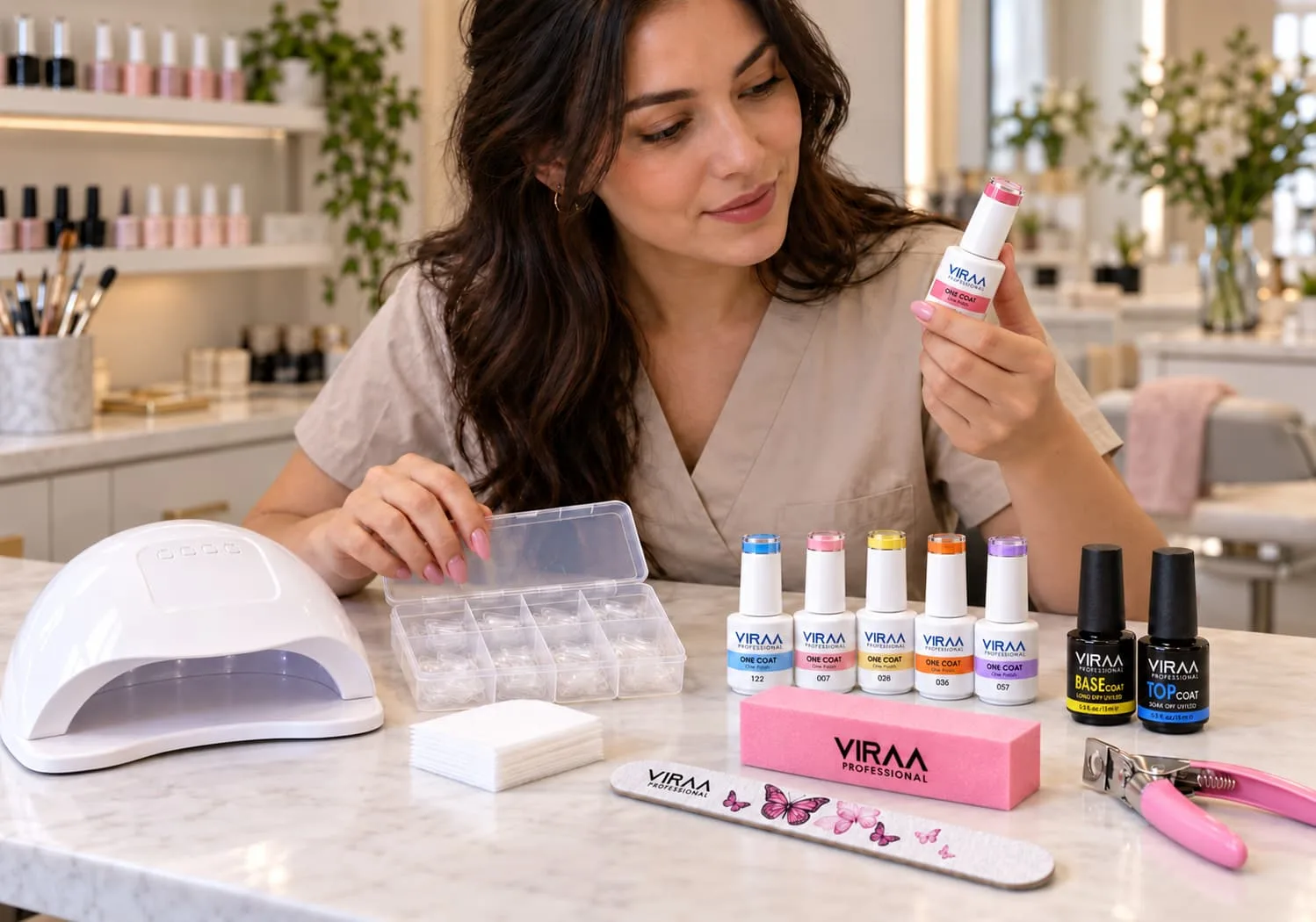
Whether the academy supplies a kit or you buy your own, these are the essentials for extension work:
- A UV or LED lamp. Every gel, builder gel and polygel cures under one. See the nail lamps.
- Prep products. Dehydrator, primer and bonder from the prep system.
- Base and top coat. From the top and base coats.
- Your extension product. Polygel, builder gel or BIAB, or tips with glue.
- Brushes. A gel brush, a polygel brush with a spatula end and a fine liner for art, from the nail art brushes.
- Files and buffers, plus a drill if your course teaches e-filing. See nail drill machines.
- Gel polish in a few core shades to finish sets.
- Practice tools. A practice hand or stand and plenty of tips to train on.
Starter bundles such as the nail kits put many of these together. Academies buying kits for a whole batch of students can ask for trade pricing on the academy supplies page.
Costs beyond the course fee
The fee is rarely the whole cost. Budget as well for travel to the academy, any models you need to bring for the assessment, extra practice tips and product once the kit runs low, and a lamp of your own if the kit does not include one. If you plan to work for yourself, add a good chair and table light, a dust collector if you will use a drill, and some photographs of your work for social media. Spending a little on these early helps you start earning sooner, because clients book from photos and come back for comfort and good results. Keep a simple record of what each set costs you in product, so that when you set your own prices you know exactly what the work needs to earn.
How to choose a nail academy
Ask these questions before you pay a deposit:
- How many hours are hands-on? Watching demonstrations is useful, but you learn extensions by doing them.
- How many students per trainer? Smaller groups mean more correction of your own work.
- Will I work on real clients or models? Practice on tips is necessary but not enough.
- Which systems are taught? Make sure the course covers the system you want to offer.
- What is in the kit, and which brands? Ask for a list and check that the products are ones you can buy again.
- What certificate do I get, and who recognises it?
- Is there support after the course? Refresher sessions, a group to ask questions in, or help with job placement.
- Can I see students' work? Recent before-and-after photos tell you more than the brochure.
After the course: earning from nail extensions
Most newly trained technicians start in one of three ways: joining a salon, working freelance from home or visiting clients, or opening a small studio. Each has different costs and income. Our guides to freelance nail artist income in India and opening a nail salon in India cover the numbers, and nail extension prices in India shows what clients typically pay for each service.
Whichever route you choose, keep practising, photograph your work in good light to build a portfolio, and keep learning: a second system, faster refills or better art each let you charge more. A good nail extension course gives you the foundations; regular practice and good products turn them into a career.